Museum Atlas Egypt
Egypt's museum collections explained
A working vocabulary for periods, materials and museum choices—without reducing Egyptian history to one royal timeline.
Start with relationships
A museum object has more than one date
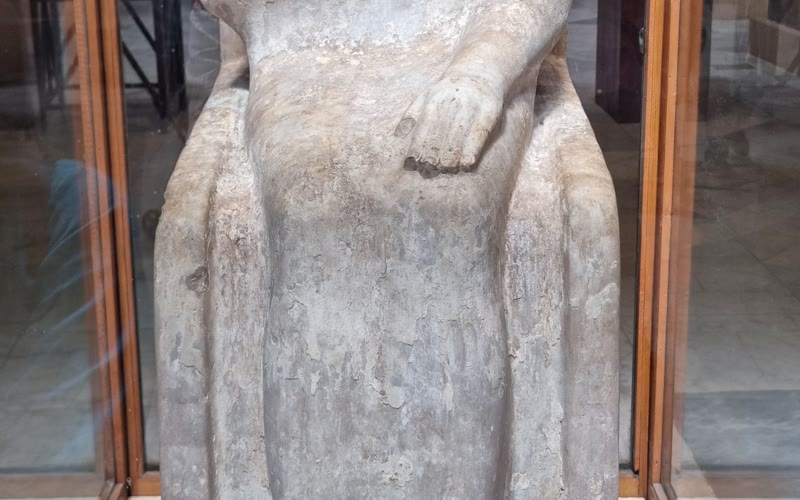
It belongs to the period when it was made, the archaeological context where it was found, and the modern history of collection, conservation and display.
Ask what the label can establish, what has been reconstructed and why the object is in this room now.
A compact glossary
Eight lenses for reading collections
Period names are useful coordinates, not boxes with hard cultural edges.
- Predynastic
- Communities and material cultures before political unification, studied through settlements, burials, pottery and exchange.
- Old Kingdom
- The era associated with pyramid building, changing royal institutions and powerful developments in sculpture and tomb culture.
- Middle Kingdom
- A period of political reunification, literary production and distinctive approaches to royal and private representation.
- New Kingdom
- Imperial expansion, major temple building and royal burials that dominate many popular museum narratives.
- Late and Greco-Roman
- Centuries of changing Egyptian, Mediterranean and imperial relationships—not a simple decline after the pharaohs.
- Coptic
- Christian Egyptian histories expressed through language, manuscript, textile, architecture, image and lived practice.
- Islamic periods
- Many dynasties, regions and communities linked through faith, trade, power, craft and the movement of ideas.
- Nubian histories
- Distinct Nile Valley societies and kingdoms whose archaeology and living cultures cannot be reduced to southern Egypt.
Museum strengths
Choose a collection lens
No museum owns an era completely. This table describes emphasis, not an exhaustive inventory.
| Museum | Primary lens | Useful for |
|---|---|---|
| Grand Egyptian Museum | Ancient Egypt at monumental scale | First visits, Tutankhamun, architecture |
| The Egyptian Museum in Tahrir | Pharaonic archaeology in a historic display | Object study, museum history, repeat visits |
| National Museum of Egyptian Civilization | Egyptian civilization across eras | Chronology, Royal Mummies Hall, context |
| The Coptic Museum | Coptic art and Christian Egypt | Textiles, manuscripts, icons, Old Cairo |
| Museum of Islamic Art | Islamic art across regions and media | Craft, calligraphy, design, material history |
| Luxor Museum | Theban archaeology and regional context | Focused display, sculpture, temple context |
| Nubia Museum | Nubian archaeology, culture and environment | Regional history, landscape, living heritage |
Five questions
Read beyond the masterpiece
A reliable object habit works in every museum.
What is it made from?
Material points toward labour, trade, technology, value and survival.
Where was it found?
Archaeological context can matter more than visual fame.
What is restored?
Notice modern joins, missing parts and the decisions behind display.
Who used it?
Royal ownership is only one part of Egypt's social history.
Why this label?
Names, dates and interpretations can carry scholarly debate.